
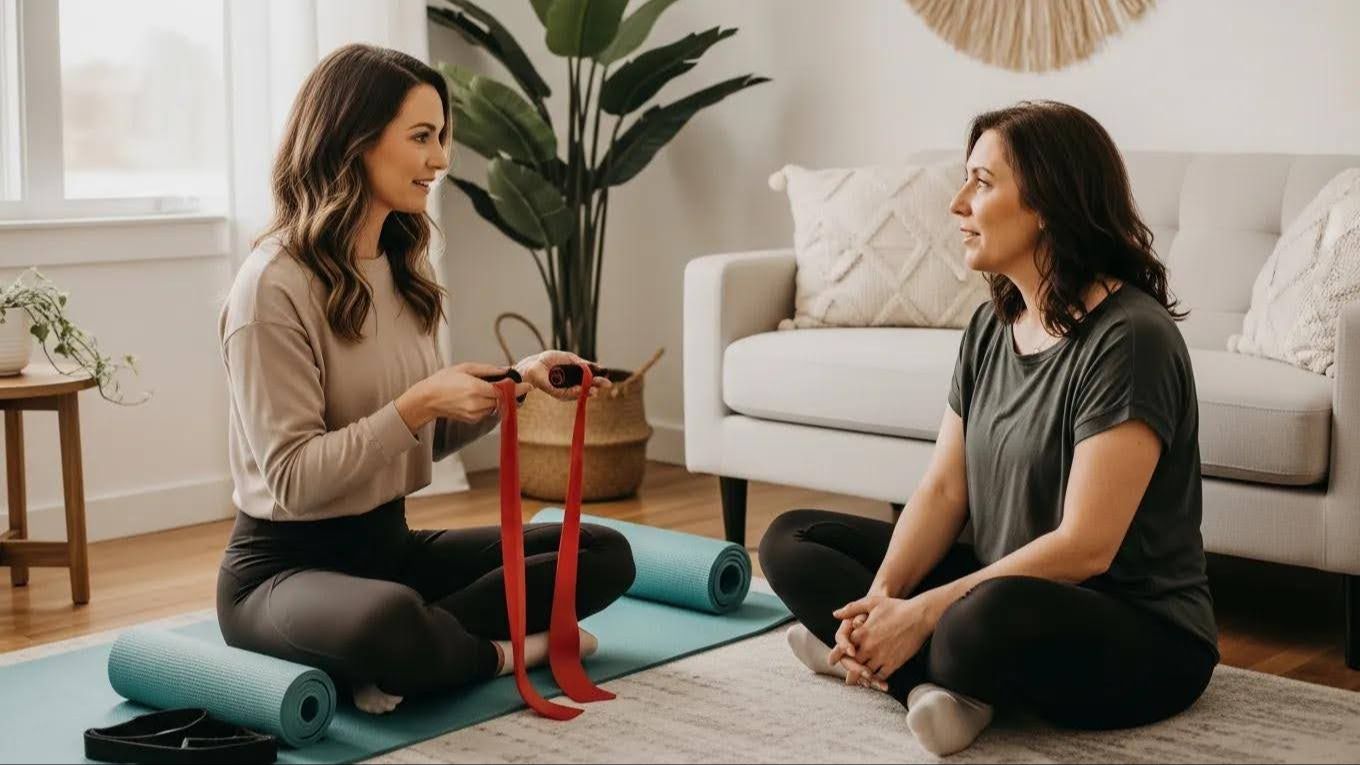
How Is a Pelvic Floor Coach Different From a Pelvic Floor Physiotherapist?
May 10, 2026By Kim Vopni, The Vagina Coach — Certified Pelvic Floor Fitness Specialist · Published May 11, 2026
Direct Answer: A pelvic floor coach focuses on education, exercise, and self-management to help women build strength and body awareness, while a pelvic floor physiotherapist is a licensed healthcare professional who performs clinical assessments, diagnosis, and hands-on treatments like manual therapy and biofeedback. Both roles are valuable and work collaboratively — coaching suits mild to moderate symptoms, while physiotherapy is recommended for complex conditions or an annual pelvic floor check-up.
Key Takeaways:
- A pelvic floor coach specializes in education, exercise, and personalized coaching, while a pelvic floor physiotherapist is a regulated, licensed healthcare professional with a physiotherapy degree and additional pelvic-health training.
- Physiotherapists perform clinical assessments and offer treatments such as manual therapy, biofeedback, and therapeutic exercise, while coaches emphasize self-management, progressions, and holistic wellness tools.
- Coaching is often a good fit for women with mild to moderate symptoms, while physiotherapy is recommended for more complex conditions like severe pain or significant incontinence.
- It's recommended that all women see a pelvic floor physiotherapist annually for a check-up, even without symptoms, to screen for pelvic floor dysfunction early.
- A pelvic floor coach and a pelvic floor physiotherapist are both valuable members of your health and wellness care team, and using both together can be hugely beneficial.
Knowing the difference between a pelvic floor coach and a pelvic floor physiotherapist helps you choose the right care. Both aim to improve pelvic health, but their training, methods, and focus differ. This article explains each role, the benefits they offer, and when one approach may suit your needs more than the other. You’ll learn what coaches typically provide, what clinical qualifications physiotherapists hold, and how to decide based on your symptoms and goals.
Understanding Roles, Benefits, and Care Options
Pelvic floor coaches and physiotherapists both support women's pelvic health, but they do so in different ways. Coaches prioritise education, exercise and self-care strategies to empower you. Physiotherapists perform clinical assessments, provide manual treatments and offer pelvic floor exercise guidance. Knowing these roles lets you navigate care options with more confidence. A pelvic floor coach and a pelvic floor physiotherapist are both valuable members of your health and wellness care team and work collaboratively.
What Is a Pelvic Floor Coach and What Services Do They Provide?
A pelvic floor coach specialises in pelvic health education, exercise and personalised coaching. Services often include one-on-one sessions, online group coaching, practical resources, and ongoing support. Coaches commonly take a holistic view, combining targeted exercises with emotional-wellness tools to help you manage symptoms and build self-efficacy.
Defining Pelvic Floor Coaching and Its Holistic Approach
Pelvic floor coaching addresses physical, emotional and psychological factors that affect pelvic health. Coaches use pelvic floor exercises, breath mechanics and mindfulness to restore function and reduce tension. This integrated approach strengthens the body–mind connection and supports lasting improvements.
Overview of Pelvic Floor Coaching Programs Like the Buff Muff Method
Programs such as the Buff Muff Method show a structured coaching model. These programs deliver progressive exercises to strengthen pelvic muscles, improve core stability and support pelvic health. Participants gain practical skills, learn symptom-management techniques and receive guided follow-up from their coach.
What Are the Roles and Clinical Qualifications of a Pelvic Floor Physiotherapist?
Pelvic floor physiotherapists are regulated licensed healthcare professionals with specialised training in pelvic health. They usually hold a physiotherapy degree plus additional pelvic-health qualifications. Their clinical role includes detailed assessment, diagnosis and tailored treatment planning to address specific pelvic conditions.
Scope of Practice and Medical Treatments Provided by Physiotherapists
Physiotherapists use a range of clinical treatments for pelvic floor dysfunction. Common approaches include manual therapy, biofeedback and targeted therapeutic exercise. Their clinical training lets them manage more complex presentations and provide interventions grounded in clinical reasoning.
Physiotherapists base their assessments and interventions on evidence-informed practice and clinical standards.
Evidence-Based Pelvic Floor Physical Therapy
This edition refines and expands the examination tests and measures used to assess the pelvic floor and outlines evidence-based interventions for management.
Evidence-based physical therapy for the pelvic floor: bridging science and clinical practice, S Mørkved, 2014
Training and Certification Requirements for Pelvic Floor Physiotherapists
To practise as a pelvic floor physiotherapist you must complete a physiotherapy degree and then pursue specialised pelvic-health training. Certification courses and continuing professional development strengthen clinical skills. This formal training prepares physiotherapists to deliver safe, effective care for pelvic floor disorders.
Ongoing education and clinical experience are key to developing the expert skills physiotherapists use in patient care.
Expert Pelvic Floor Physiotherapist Attributes
This work examines the attributes of expert physiotherapy continence clinicians and compares them to novices in terms of experience, knowledge, capability and pelvic-floor skills.
Attributes of physiotherapy continence clinicians: a qualitative perspective, J Hay-Smith, 2020
What Is the Difference Between Pelvic Floor Physical Therapy and Pelvic Floor Physiotherapy?
Pelvic floor physiotherapists and pelvic floor physical therapists are essentially the same type of practitioner. Different parts of the world use different terminology. In Canada, many parts of Europe, Australia and New Zealand, the term physiotherapy is most commonly used. The United States uses the term Physical Therapy.
What Are the Key Differences Between Pelvic Floor Coaching and Physiotherapy?
The main differences are in focus and methods. Coaches emphasise education, exercise and progressions, self-management and empowerment. Physiotherapists focus on clinical assessment and treatment which may include modalities like ultrasound or biofeedback. Recognising these distinctions helps you pick the most appropriate provider for your situation while remembering that both members are valued people for your health and wellness care team.
Comparing Coaching Programs and Clinical Rehabilitation Techniques
Coaching programs tend to promote self-directed learning and practical tools you can apply daily. Clinical rehabilitation from physiotherapists involves hands on therapy and treatment modalites. Which approach is most effective depends on your condition and personal preferences.
When to Choose Coaching Versus Physiotherapy for Pelvic Floor Dysfunction
Choose based on symptom severity and goals. Women with mild to moderate symptoms often benefit from coaching and self-management. If your condition is complex—such as severe pain or significant incontinence—you should seek a physiotherapist for clinical assessment and targeted treatment. It is recommended that all women see a pelvic floor physiotherapist annually for a check up, even if they have no symptoms as a way to screen for pelvic floor dysfunction before it becomes a bigger problem.
What Are the Benefits of Pelvic Floor Coaching for Women?
Pelvic floor coaching delivers practical benefits that support health and daily function. Key advantages include holistic care, flexible access and education that helps you take control of symptoms.
- Holistic Approach: Coaching addresses both physical and emotional aspects of pelvic health, promoting overall wellness.
- Accessibility: Coaching services are often more accessible and flexible, allowing women to engage in their health journey at their own pace.
- Empowerment Through Education: Coaches provide valuable knowledge and resources, empowering women to take control of their pelvic health.
Empowerment Through Self-Care and Community Support
Community and peer support strengthen the coaching process. Coaches often build groups or networks where clients share experiences and encourage each other. That social support enhances adherence and outcomes.
Pelvic Floor Strengthening Exercises and Emotional Wellness Integration
Regular pelvic floor exercises, combined with breath work and stress-reduction techniques, can improve function and reduce symptoms. Coaches guide you through routines that address muscle strength and emotional wellness together.
How Do Pelvic Floor Physiotherapists Address Pelvic Floor Dysfunction?
Physiotherapists use structured assessments to find the root causes of dysfunction. They review your medical history, perform physical examinations and then create a personalised treatment plan based on their findings.
Clinical Assessment and Treatment Modalities for Pelvic Health Conditions
Treatment options from physiotherapists include manual therapy, biofeedback, and therapeutic exercise. These evidence-informed modalities aim to restore function, reduce pain and improve quality of life.
Managing Pelvic Pain and Postpartum Rehabilitation
Physiotherapists provide targeted care for pelvic pain and postpartum recovery. Their interventions support healing after childbirth and address lingering pelvic issues to aid a safer, more comfortable return to daily activities.
How Can Women Decide Between a Pelvic Floor Coach and a Physiotherapist?
Decide by matching your symptoms and goals to the provider's strengths. Assess how severe your symptoms are and whether you need clinical diagnosis or guided self-management. Remember it doesn’t always have to be a choice of one or the other. Using both a pelvic floor physiotherapist and a pelvic floor fitness coach is hugely beneficial.
Factors to Consider Based on Symptoms and Care Goals
Consider symptom complexity, the outcomes you want and how much hands-on support you need. Use these factors to choose the option that best fits your pelvic health journey.
Accessing Resources and Certification for Pelvic Health Support
You can find support through educational materials, community groups and professional organisations. Checking certification routes and training for providers helps you make an informed choice about care.
|
Program |
Focus Area |
Benefits |
|
Buff Muff Method |
Pelvic floor strengthening |
Improved muscle control, enhanced core stability |
|
Personalized Coaching |
Holistic health |
Empowerment through education, emotional support |
|
Pelvic Floor Physiotherapy |
Clinical assessment |
Comprehensive treatment, targeted interventions |
For more information about the team and their approach, you can learn about Vagina Coach and their philosophy.
If you're interested in a comprehensive approach to pelvic floor health, Vagina Coach offers various resources and programs.
Frequently Asked Questions
What qualifications should I look for in a pelvic floor coach?
Look for training and practical experience in pelvic health. Coaches who have completed recognised pelvic-health courses and who bring related backgrounds—fitness, health coaching or allied therapy—are preferable. Certificates of completion and clear examples of a holistic practice indicate professional standards and competence.
Can pelvic floor coaching help with postpartum recovery?
Yes. Coaches often design postpartum programs that rebuild pelvic strength, restore core stability and address emotional challenges after childbirth. Practical exercises and self-care strategies help new mothers regain confidence and support recovery.
How do I know if I need a pelvic floor physiotherapist instead of a coach?
It is recommended that all women see a pelvic floor physiotherapist annually for a check up even if there are no symptoms of dysfunction. It is essential to seek a physiotherapist when symptoms are severe or complex—chronic pain, significant incontinence or other medical concerns. Physiotherapists perform clinical assessments and offer medical interventions. If your symptoms are milder or you want guided self-management, a coach may be appropriate.
What types of exercises do pelvic floor coaches typically recommend?
Well rounded coaches commonly recommend a whole body approach to pelvic floor exercise including, breath work, posture, lifestyle guidance and and progressive loading of the pelvic floor. They often add mindfulness and relaxation techniques to support emotional wellness. The aim is a balanced routine that builds strength and reduces tension.
Are there any risks associated with pelvic floor coaching?
As with any fitness coaching, Pelvic Floor Coaching is generally safe, but exercises can cause discomfort if done incorrectly or if underlying conditions exist. Consult a healthcare professional before starting a new program, especially with a history of pelvic pain or dysfunction. A qualified coach will screen your needs and adapt exercises to keep you safe.
How can I find a qualified pelvic floor coach in my area?
Start with online directories and professional organisations that list pelvic-health coaches. Ask for referrals from healthcare providers like gynaecologists or physiotherapists. Many coaches offer virtual sessions, so you can expand options beyond your local area. Check credentials, experience and client feedback before choosing.
Conclusion
Knowing the differences between a pelvic floor coach and a pelvic floor physiotherapist gives you control over your care choices. Each path offers distinct benefits—coaching for education and self-management, physiotherapy for clinical assessment and treatment. Review your symptoms and goals, then reach out to a qualified pelvic health professional for personalised guidance. To further explore your options, consider visiting Vagina Coach for personalized guidance.
If you enjoyed this article, you might also like our episode:
OTC Hormones with Karen Martel
Listen to the episode


