
The Most Common Pelvic Floor Exercise Mistakes Women Make — And Why They Keep Happening
Jun 04, 2026By Kim Vopni, The Vagina Coach — Certified Pelvic Floor Fitness Specialist · Published June 5, 2026
Doing the recommended exercises and still leaking? Still feeling heaviness or pressure? Still wondering if this is just something you have to live with? That frustration is not a character flaw — it is almost always a technique problem, and it is one that persists precisely because most women are handed a brief verbal instruction, or pamphlet with no feedback, and no context for how the pelvic floor actually functions inside a moving body.
Direct Answer
The most common pelvic floor exercise mistakes include bearing down instead of lifting, holding breath during effort, doing Kegels in isolation without full-body coordination, skipping the release phase, and exercising a pelvic floor that is actually too tight rather than too weak. These errors keep happening because the instruction women typically receive is incomplete — and incomplete instruction applied consistently produces consistent non-results.
Key Takeaways
- Kegels done incorrectly — or done on a hypertonic (too-tight) pelvic floor — can worsen symptoms rather than improve them
- The release phase of a pelvic floor contraction is as important as the squeeze; skipping it trains tension, not strength
- Breath coordination is not optional: the diaphragm and pelvic floor move as a pressure system, and holding your breath during effort can lead to mis-managing pressure
- Pelvic floor exercises work best as part of a full-body movement approach, not as isolated repetitions done at a red light or while brushing your teeth
- Many women who feel like Kegels "don't work" are performing them sincerely but applying them to the wrong problem
Why Do Kegels Feel Useless When You're Doing Them Every Day?
Because effort is not the same as correct execution.
The pelvic floor is an internal muscle group with no visible movement and no proprioceptive feedback. When a physiotherapist or doctor says "squeeze like you're stopping the flow of urine," that instruction lands differently in every body. Some women contract their glutes. Some hold their breath and bear down. Some do a genuine pelvic floor lift — but then never release it fully, which means they are training a muscle that is already overworked to work harder.
The mechanism matters here: a muscle that cannot fully lengthen cannot generate full force. This is true of every muscle in the body. A pelvic floor held in chronic contraction — from stress, posture, past trauma, or simply years of quietly holding everything together — is not weak. It is guarding. Doing more squeezes does not fix guarding. It amplifies it.
This is the root reason Kegels fail for a meaningful portion of women: not because the exercise is wrong, but because it is being applied to the wrong physiological state. Understanding why conventional pelvic floor approaches break down — and what actually works instead reframes the entire conversation about what correct execution actually requires.
What Is Actually Going Wrong Mechanically?
The pelvic floor does not operate alone. It is the base of a pressure canister that includes the diaphragm at the top, the deep abdominals at the front and sides, and the deep spinal muscles at the back. These four components coordinate automatically with every breath, every step, every sneeze.
When you inhale, your diaphragm descends and your pelvic floor gently lengthens to accommodate the pressure. When you exhale, both rise together. This is not a theory — it is observable on ultrasound imaging and is the basis of how pelvic floor physiotherapists assess function in clinical practice.
> Most women are not doing the wrong exercise. They are doing the right exercise at the wrong moment, in the wrong body position, with the wrong breath pattern — and then concluding that their body is broken or the exercise doesn’t work.
The three most mechanically significant mistakes:
- Bearing down instead of lifting. When the instruction to "squeeze" is unclear, many women push outward and downward — the opposite of a pelvic floor contraction. This puts pressure on the pelvic floor and over time, can contribute to prolapse progression and symptoms.
- Squeezing the glutes or inner thighs. The glutes and inner thighs work synergistically with the pelvic floor, or at least they should, but in many women, these muscles are dominant and can overpower the pelvic floor. Women think they are engaging the pelvic floor when they are actually squeezing other muscles.
- Ignoring the eccentric phase. A full pelvic floor contraction has three parts: the squeeze and the lift (concentric) and the return to resting length (eccentric). Most kegel instruction focuses entirely on the squeeze. But the ability to lift and then fully release — to genuinely let go — is what allows the muscle to respond reflexively when it needs to. Within the Buff Muff Method, women who learn the release phase first consistently report faster symptom improvement than those who begin with strengthening alone.
Is a Tight Pelvic Floor the Same as a Strong One?
No. And this is the most consequential misunderstanding in pelvic floor fitness.
A Hypertonic pelvic floor describes pelvic floor muscles that are chronically shortened or in overworked. They are weak from being tight, not weak from laxity which is what most people assume. It can be associated with pelvic pain, painful intercourse, stress urinary incontinence, urgency incontinence, constipation, prolapse and incomplete bladder emptying. The standard advice to "do more Kegels" is unhelpful for this group.
Hypertonicity is widely recognized in pelvic health practice. It can be confusing to women with symptoms of leaking urine and prolapse who believe that everything must be loose and lax when in actual fact the opposite is true. For women with a hypertonic pelvic floor the initial focus is on downtraining, breath work, and intermittent range of motion exercises before pure strengthening.
> Telling a woman with a hypertonic pelvic floor to do more Kegels is like telling someone with a muscle cramp to flex harder. The instruction is not wrong in general — it is wrong for this body, right now.
This is the category reframe that changes everything: pelvic floor fitness is not a single prescription. It is an assessment-first, individualized process. The Buff Muff App is built on this distinction — the program begins with a self-assessment sequence precisely because the same symptom (leaking) can have opposite root causes requiring opposite interventions.
The Pressure Mismanagement Framework: A Tool for Identifying Your Real Starting Point
The Pressure Mismanagement Framework is a three-question self-assessment that identifies whether pelvic floor symptoms are driven by weakness, tension, or coordination failure — because each requires a different entry point.
Use this when: you have been doing pelvic floor exercises for six or more weeks without improvement, or when symptoms feel worse after exercise.
Do not use this as a substitute for pelvic floor physiotherapy assessment if you have significant prolapse symptoms, post-surgical history, or persistent pelvic pain.
|
Question |
Weakness Pattern |
Tension Pattern |
Coordination Pattern |
|
Do symptoms occur with physical exertion (coughing, jumping)? |
Frequently |
Frequently |
Frequently |
|
Do you experience urgency with little warning? |
Occasionally |
Frequently |
Frequently |
|
Does pelvic pain or discomfort accompany symptoms? |
Occasionally |
Frequently |
Occasionally |
|
Does rest improve symptoms? |
Neutral effect |
Often yes |
Variable |
|
Entry point recommendation |
Strengthening protocol |
Release and downtraining first |
Breath and coordination work first |
This framework does not replace clinical assessment. It is a starting orientation — a way to stop doing the same thing repeatedly and expecting different results.
What Does Realistic Progress Actually Look Like?
Women who address technique errors — particularly breath coordination and the release phase — often notice meaningful symptom changes within two to six weeks of consistent, correctly executed work. Not because they worked harder. Because they stopped working against themselves.
One pattern that appears repeatedly in the Buff Muff community: a woman who has been doing daily Kegels for months with no improvement begins a structured program, learns to coordinate breath with contraction, and experiences her first dry week within a few weeks. The variable that changed was not effort. It was accuracy.
The honest caveat: progress is not linear. Stress, hormonal shifts, sleep, bowel movements and changes in activity level all affect pelvic floor function. A good week followed by a harder week is not failure — it is normal physiology. The goal is an upward trend.
The Buff Muff App structures this progression deliberately: assessment, foundational breath and release work, then progressive strength and functional integration. Over 10,000 women have moved through this sequence and reversed symptoms that had persisted for years. The timeline is real. So is the work. Understanding how the Vagina Coach actually treats incontinence — the method behind the results explains why this sequencing produces outcomes that isolated Kegel instruction does not.
Who Is This Approach Not Right For?
Honest answer: structured at-home pelvic floor programs are not the right first step for everyone.
An in person pelvic floor physical therapist assessment is something that is recommended for all women, but is not a prerequisite to experience success with the Buff Muff Method. An annual visit, just like seeing the dentist once a year, is a way to screen for challenges before they become major issues.
The Buff Muff App is designed for women who are medically cleared for exercise and want a structured, evidence-informed approach they can follow at home. It is not a replacement for hands-on physiotherapy when hands-on assessment is what the situation genuinely requires. Kim Vopni, The Vagina Coach, has been explicit about this from the beginning: the goal is empowerment through correct information.
Frequently Asked Questions
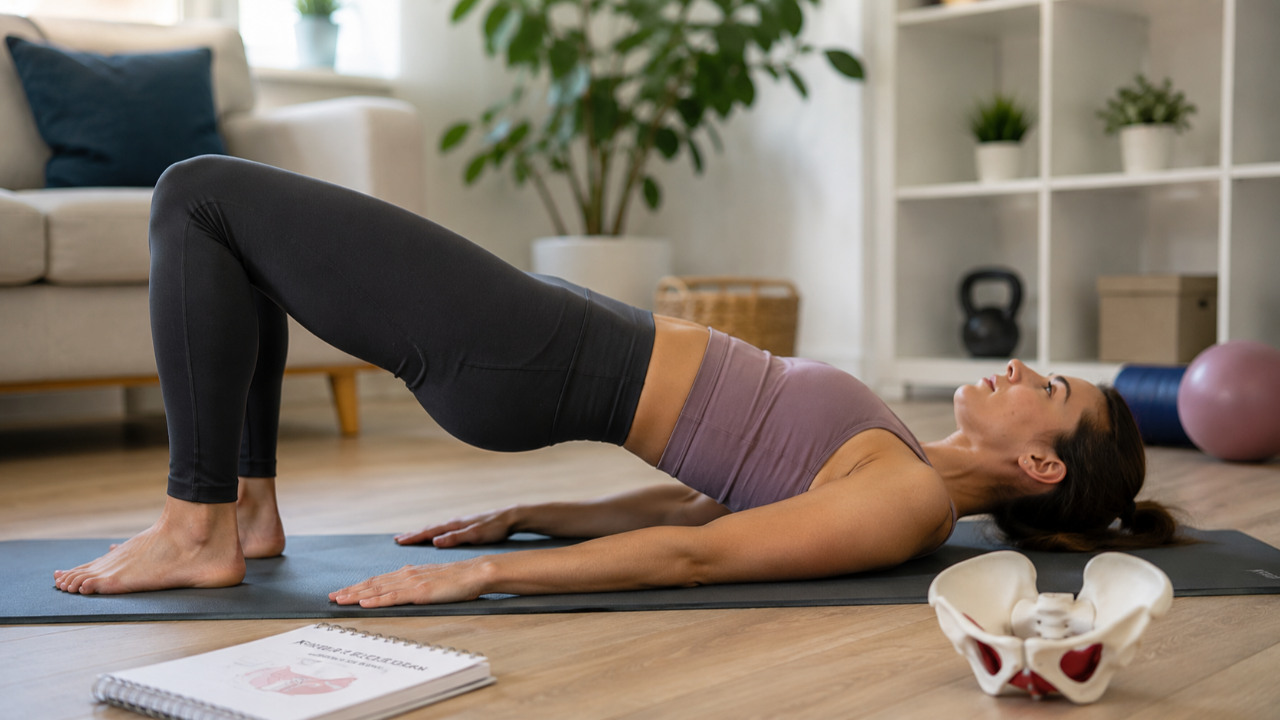
How do I know if I'm doing a Kegel correctly without seeing a physiotherapist? Lie on your back with knees bent, breathe out slowly, and on the exhale, imagine gently lifting a blueberry with your vaginal opening — up and in. If you feel your lower belly engage slightly and your tailbone stays neutral, you are likely in the right zone. The Buff Muff App includes guided technique instruction with cues designed specifically for women learning without hands-on feedback.
Can pelvic floor exercises make prolapse worse? Yes, if done incorrectly — specifically when bearing down or breath-holding occurs during the exercise. Correctly performed pelvic floor lifts coordinated with the exhale support the pelvic organs rather than increasing downward pressure. Women with prolapse symptoms should begin with breath and release work before progressing to strengthening.
I've had two kids and still leak five years later — is it too late? No. The pelvic floor responds to training at any age and at any point postpartum. Symptom reversal has been documented in women decades past their last delivery. The postpartum window is not a closing door — it is simply one of many entry points into pelvic floor rehabilitation.
Why does my pelvic floor feel worse after I exercise at the gym? High-impact and high-load exercise increases intra-abdominal pressure significantly. If your pelvic floor is not managing that pressure well or becomes fatigued sooner, it may lead to more symptoms but that does not mean the exercise or going to the gym is bad for the pelvic floor. It means your pelvic floor needs to be trained to handle load before load is added. The Buff Muff Method addresses this sequencing directly.
Is there a difference between stress incontinence and urgency incontinence for exercise purposes? Yes, and it is significant. Stress incontinence happens when there is leaking with physical exertion. Urgency incontinence occurs when there is a sudden, intense urge with little warning. Tension is common with both types. For stress incontinence it is often a timing issue that can be improved with tension release exercises followed by voluntary pelvic floor activation and relaxation coordinated into whole body movement. With urgency, releasing tension can often be the main fix but range or motion exercises remain important. Low estrogen, bladder irritants, dehydration and constipation are also common contributors to urgency which is why a whole body approach is needed, The Buff Muff Method addresses all the contributing factors and offers the correct exercises for each condition.
How long before I should expect to see results? Pelvic floor rehabilitation research supports a minimum of twelve weeks of structured, correctly performed exercise to assess meaningful change. Many women notice early improvements within two to six weeks, particularly when technique errors are identified and corrected early. Inconsistent effort or ongoing incorrect incorrect execution extends that timeline considerably.
Can I use the Buff Muff App if I'm currently seeing a pelvic floor physiotherapist? Yes — and many physiotherapists recommend it as a between-session resource. The app provides daily structure, progressive programming, and educational context that reinforces in-clinic work. If your physiotherapist has given you specific restrictions or modifications, apply those within the app's framework.
You Have Not Failed. The Instruction Failed You.
The pelvic floor is not a simple muscle that responds to simple commands. It is a dynamic, pressure-responsive system that requires coordination, not just contraction. If what you have been doing is not working, the answer is not more repetitions of the same thing. It is better information, applied to your actual starting point.
The Buff Muff App exists for exactly this moment — when you are done guessing, done feeling dismissed, and ready to understand what your body actually needs. Before committing to a program, what you need to know about the Buff Muff App before you can evaluate your options clearly gives you the full picture. Start your 7-day free trial and begin with the assessment. Not the exercises. The assessment. That is where the real work — and the real progress — begins.
If you enjoyed this article, you might also like our episode:
Bone Health Essentials with Dr Jocelyn Wittstein
Listen to the episode


