
How The Vagina Coach Actually Treats Incontinence: The Method Behind the Results
Jun 18, 2026By Kim Vopni, The Vagina Coach — Certified Pelvic Floor Fitness Specialist · Published June 19, 2026
Leaking when you laugh, sneeze, or sprint is not a personality flaw, a consequence of aging, or proof that your body is broken. According to the American Urogynecologic Society, urinary incontinence affects over 25 million adults in the United States — the majority of them women — and most never seek help because they assume nothing can be done.
Something can be done. And it starts with understanding why the standard advice keeps failing.
Direct Answer
The Buff Muff Method, developed by Kim Vopni (The Vagina Coach), treats incontinence by retraining the entire pelvic floor system — not just squeezing a muscle in isolation. The approach combines functional movement, breath mechanics, pressure management, and progressive exercise sequencing to reverse the root dysfunction. Most women see meaningful symptom reduction within 6 to 12 weeks of consistent practice.
Key Takeaways
- Kegel exercises alone fail most women because they do not address the common root causes of coordination, timing, or the pressure system that drives leaking.
- The Buff Muff Method treats the pelvic floor as a pressure management system, not an isolated muscle group.
- Breath mechanics are the entry point — not an afterthought — because intra-abdominal pressure is the primary driver of most incontinence symptoms.
- Meaningful symptom reduction is realistic within 2 to 6 weeks; full reversal of dysfunction typically takes 3 to 6 months of consistent practice.
- The Buff Muff App delivers this method in a structured, at-home format — no clinic required, no waitlist, no co-pay.
Why Do Kegel Exercises Keep Failing Women Who Do Them Consistently?
Here is the contrarian claim, stated plainly: doing Kegels correctly and consistently is not enough to reverse incontinence for most women — and prescribing more of them is the single most common reason women stop believing recovery is possible.
The mechanism matters here. People think a Kegel is a squeeze but there also needs to be a lift and a release of the pelvic floor. Many also think the pelvic floor needs to be isolated but the pelvic floor works as a team and needs to be trained that way. It works in concert with the diaphragm, the deep abdominal muscles, and the muscles of the hip and spine to manage intra-abdominal pressure — the force generated every time you breathe, move, cough, or lift something.
When the pressure management system is dysregulated, no amount of isolated squeezing fixes the leak. The pressure still spikes. The floor still gives way.
Kegels are not wrong. They are incomplete — and prescribing them without addressing the root causes and the pressure system is like patching a tire without checking the alignment.
This is why women who "do their Kegels religiously" still leak. The muscle may be stronger. The system is still broken. The most common pelvic floor exercise mistakes women make go well beyond technique — they are built into the standard advice itself.
What Is the Buff Muff Method and How Does It Actually Work?
The Buff Muff Method is a structured, progressive pelvic floor fitness protocol that treats incontinence as a whole-body coordination problem, not a localized muscle weakness.
It operates across four functional layers:
- Breath-first mechanics. Before any exercise, women learn to coordinate the exhale just before the effort — a technique that pre-activates the pelvic floor and reduces the pressure spike that causes leaking. This is not breathing as relaxation. It is breathing as load management.
- Pressure system retraining. The diaphragm and pelvic floor move together in a coordinated rhythm. When that rhythm is disrupted — by childbirth, surgery, chronic tension, or poor posture — pressure escapes downward. Retraining that rhythm is the foundation of the method.
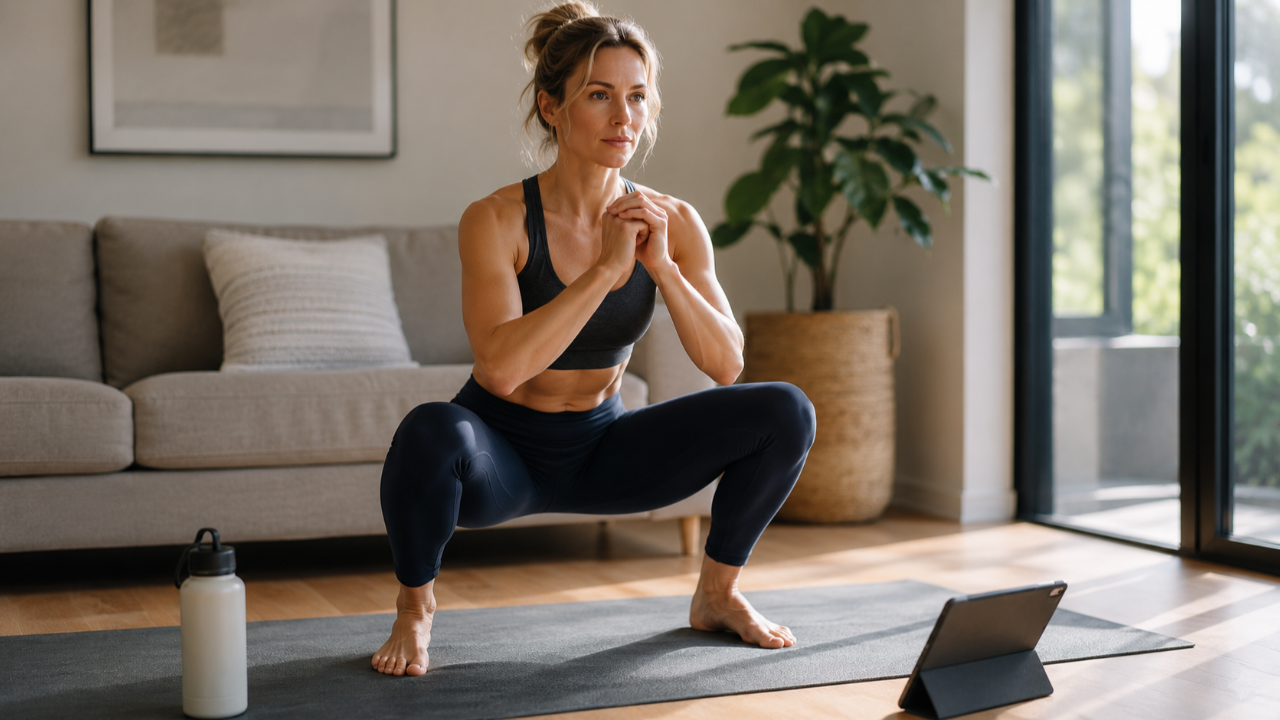
- Progressive functional movement. Once breath and pressure mechanics are established, the Buff Muff App introduces movement patterns that mirror real life: squatting, hinging, carrying, jumping. The goal is a pelvic floor that functions under load — not just during a lying-down exercise sequence.
- Symptom-specific sequencing. Stress incontinence (leaking with impact), urgency incontinence (sudden, uncontrollable urge), and mixed presentations each require different sequencing. The Buff Muff App structures programs around symptom type, not a one-size approach.
Practitioners using this approach consistently report that women who have tried and abandoned Kegel-only programs see different results here — because the mechanism being addressed is different. Understanding why conventional pelvic floor approaches break down helps explain why retraining the full pressure system produces outcomes that isolated strengthening cannot.
What Does Recovery Actually Look Like — With Real Numbers?
A realistic picture matters more than an inspiring one.
Women following the Buff Muff Method in a structured, consistent way typically report:
- Weeks 2 to 4: Increased body awareness, reduction in urgency and frequency, first signs of improved control during low-impact activity.
- Weeks 6 to 8: Measurable reduction in leaking episodes during daily movement. Many women report returning to activities they had quietly abandoned — walking without a pad, laughing without bracing.
- Months 3 to 6: Sustained symptom reversal across higher-impact activities. Women who were managing prolapse symptoms alongside incontinence often report significant relief in heaviness and pressure.
One pattern that appears repeatedly in the Buff Muff community: women who had been symptomatic for 5 to 10 years, had tried physiotherapy inconsistently, and assumed their window for recovery had closed — seeing full symptom reversal within 2-6 weeks of structured, app-guided practice.
That is not a miracle. It is what happens when the right system is applied consistently.
The pelvic floor is not a muscle you fix once. It is a system you retrain — and the timeline is measured in months, not sessions.
How Does the Buff Muff App Compare to Other Approaches?
|
Approach |
Addresses Pressure System |
Progressive Sequencing |
At-Home Access |
Symptom-Specific Programs |
Ongoing Community |
|
Yes |
Yes |
Yes |
Yes |
Yes |
|
|
Pelvic Floor PT (in-clinic) |
Yes |
Varies by provider |
No |
Yes |
No |
|
Generic fitness apps |
No |
Yes |
Yes |
No |
Varies |
|
Kegel reminder apps |
No |
No |
Yes |
No |
No |
|
Surgery / medication |
Bypasses it |
N/A |
N/A |
No |
No |
Pelvic floor physiotherapy is genuinely valuable — and the Buff Muff App does not position itself as a replacement for hands-on clinical care when that care is needed. What it does replace is the gap: the months between appointments, the exercises done incorrectly at home, the lack of progressive structure after discharge.
The Buff Muff App is where the daily work happens. What you need to know about the Buff Muff App before you can evaluate your options clearly includes how the program is structured, what a typical week looks like, and what separates it from the generic fitness and reminder apps in the table above.
What Is the Second Most Common Mistake Women Make After Starting Pelvic Floor Training?
Progressing too fast.
The pelvic floor acts as a stabilizer. It helps manage and transfer load. Women who feel early improvement and immediately return to high-impact training — running, HIIT, heavy lifting — before the pressure system is stable often experience symptom regression. Not because the method failed, but because the load exceeded the current capacity of the system.
The Buff Muff Method uses a readiness framework before introducing impact: if breath and pelvic floor coordination is inconsistent, if urgency symptoms are still frequent, or if any heaviness or pressure is present during low-load movement, impact training is not yet appropriate. Progression is earned, not scheduled.
This is the second contrarian observation worth sitting with: rest and regression are sometimes the fastest path forward in pelvic floor recovery. Pushing through symptoms is not resilience. It is setting you up for re-injury.
Who Is This Not For?
Honest limits matter.
The Buff Muff App is not appropriate as a standalone solution for:
- Women with a severe prolapse that has not been assessed by a pelvic floor physiotherapist or urogynecologist. Exercise can support prolapse management, but a current clinical assessment is recommended first.
- Women experiencing pelvic pain as the primary symptom. Hypertonic (overly tight) pelvic floors require a different approach — one that begins with release, not strengthening. The Buff Muff App includes content for this, but a physiotherapy assessment first is strongly recommended.
- Women immediately post-surgery who have not been cleared for exercise by their surgical team.
- Women who need a diagnosis. The app is a fitness and education tool, not a diagnostic platform.
The Buff Muff community includes healthcare professionals — pelvic floor physiotherapists and urogynecologists — who endorse the method. The strongest outcomes happen when the app works alongside clinical care, not instead of it.
Frequently Asked Questions
How long before I actually notice a difference? Most women notice the first changes — reduced urgency, better awareness, fewer small leaks — within 2 to 4 weeks of consistent daily practice. Meaningful reduction in incontinence episodes typically happens between weeks 6 and 8. Full symptom reversal for most women takes 3 to 6 months depending on how long the dysfunction has been present and how consistently the program is followed.
I've had incontinence for years. Is it too late to reverse it? It is not too late. The pelvic floor responds to retraining regardless of how long symptoms have been present — the nervous system retains the capacity to learn new coordination patterns at any age. Women in the Buff Muff community who have been symptomatic for a decade or more have reversed their symptoms through structured practice. The timeline may be longer, but the outcome is still achievable.
Do I need to see a physiotherapist before starting the Buff Muff App? Not necessarily, though it is always a good idea. If your symptoms are primarily stress or urgency incontinence without significant pelvic pain or a recent prolapse diagnosis, the Buff Muff App is designed to be a safe starting point. If you have pelvic pain, a known prolapse, or are post-surgical, a physiotherapy assessment first is strongly recommended.
Why haven't my Kegels worked even though I do them every day? Kegels work when done correctly and consistently and for the right condition. Stress incontinence is typically the condition most likely to respond to kegels but kegels are limited AND most are doing them incorrectly because women have never been taught or evaluated to see if they are doing them correctly. The Buff Muff Method addresses the full system, which is why it produces different results than Kegel-only approaches.
Can I use the Buff Muff App postpartum? Yes, and it is one of the most common use cases. The app includes postpartum-specific programming that begins with gentle breath and pressure work in the early weeks and progresses through functional movement as recovery advances. It is not a return-to-running program — it is a structured foundation that makes return to activity safer and more effective.
What if I start and it makes my symptoms worse? Temporary increased awareness is normal in the first week or two — you are tuning into sensations you may have been ignoring. If symptoms genuinely worsen, that is a signal to slow down, check technique, and consider whether a physiotherapy assessment is needed. The Buff Muff App includes guidance on when to modify or pause, and the community and coaching support help women navigate this rather than push through it blindly.
Is the Buff Muff App evidence-based or is it just a fitness program? The Buff Muff Method is grounded in the same physiological principles used in pelvic floor physiotherapy: pressure management, neuromuscular coordination, progressive loading, and symptom-specific sequencing. The method has been developed and refined over 15 years by Kim Vopni, and is endorsed by pelvic floor physiotherapists and urogynecologists who recommend it to their patients. It is a fitness application of clinical science — accessible, structured, and designed to produce outcomes that matter.
Ready to Stop Managing Symptoms and Start Reversing Them?
If you have read this far, you already know that what you have been doing is not the problem. The approach has been incomplete.
The Buff Muff App gives you the full method — breath mechanics, pressure retraining, progressive movement, symptom-specific sequencing — in a structured program you can follow at home, at your pace, without a waitlist or a co-pay.
Start your 7-day free trial at vaginacoach.com. Not to see if it feels right. To find out what your pelvic floor can actually do when it is trained the right way.
You are not navigating this alone.

References
American Urogynecologic Society — prevalence data on urinary incontinence in adult women in the United States.
If you enjoyed this article, you might also like our episode:
Understanding Weight Loss With Jen Powter
Listen to the episode


