

Daily life can be challenging with Rectocele Prolapse
Feb 06, 2023By Kim Vopni, The Vagina Coach — Certified Pelvic Floor Fitness Specialist · Published February 7, 2023
Direct Answer: Rectocele prolapse happens when the rectum bulges into the back of the vaginal wall due to weakened tissue, often from childbirth, menopause, heavy lifting, or chronic straining. Daily symptoms can include a visible or felt bulge, pressure, and difficulty with bowel movements. Pelvic floor exercises, a high-fiber diet, and sometimes surgery can effectively manage or resolve rectocele prolapse.
Key Takeaways:
- Rectocele prolapse occurs when weakened tissue lets the rectum bulge into the vaginal wall.
- Common contributors include childbirth, menopause-related estrogen loss, heavy lifting, and chronic constipation/straining.
- A high-fiber diet and good bowel habits help prevent symptoms from worsening.
- Pelvic floor exercises can strengthen supporting muscles for mild to moderate cases.
- Surgery may be recommended for more significant prolapse that affects daily life, ideally paired with pre-hab and the right surgical team.
It can be a struggle in our daily life when we suffer from Rectocele Prolapse.
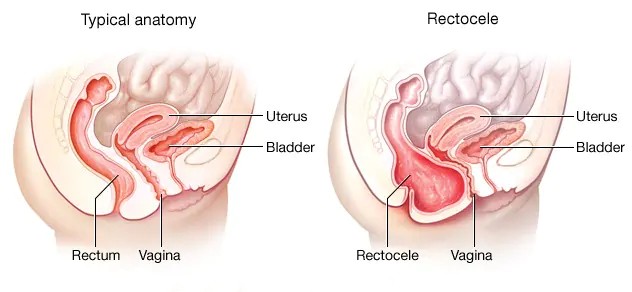
A rectocele happens when the rectum falls forward into the back of the vagina. The tissue becomes thin and weak over time between the rectum and the vagina, resulting in a rectocele.
Symptoms of Rectocele Prolapse
You may not notice symptoms if the bulge (prolapse) is slight. With a more significant prolapse, your rectum may protrude out of your vagina.
Pregnancy, especially having more than one child, and if there is trauma like tearing during the delivery, can contribute to rectocele prolapse. Our pelvic floor weakens as we enter menopause and our estrogen drops which can affect the pelvic floor. Heavy lifting can stretch and weaken, putting strain on your pelvic floor muscles. Constipation and straining can also weaken the pelvic muscles.
Prevention
It is essential to have a good bowel regimen to avoid constipation and straining with bowel movements.
A high-fibre diet coupled with increased water intake will give you softer, bulkier stools that do not require significant straining with bowel movements and reduce your risk of having a symptomatic rectocele.
For mild cases of rectocele, pelvic floor exercises will strengthen your pelvic floor muscles. Learning what exercises are beneficial and how to exercise effectively is essential.
The Buff Muff App will give you everything you need to prevent and overcome rectocele prolapse. Best of all, you are part of a community of women who understand what you are going through and where you can ask questions etc.
Do I need Surgery to fix Rectocele Prolapse?
Most of the symptoms associated with rectocele prolapse can be managed effectively without surgery. However, untreated, it can lead to other complications. Surgery may be an option if your rectocele prolapse negatively affects your lifestyle. When deciding to have surgery, it is essential to consider pre-hab, working with a pelvic floor physical therapist and choosing the right surgeon.
I lived with rectocele prolapse for over eight years. Surgery was something I debated having for four years, and I did not come to this decision lightly, but I know it was the right choice for me. You can follow my prolapse journey HERE
If you are considering surgery, my Pelvic Surgery Success is a one-of-a-kind program that will take you from feeling depressed, anxious, and consumed by fear of surgery to informed, confident and calm so you can put your nagging symptoms behind you and get back to living life with spontaneity and joy!

Frequently Asked Questions
What is rectocele prolapse?
Rectocele prolapse occurs when the tissue between the rectum and vagina weakens and thins, allowing the rectum to bulge into the back wall of the vagina. It can result from childbirth, menopause, heavy lifting, or repeated straining during bowel movements.
What are the symptoms of rectocele prolapse?
Mild rectocele may cause no noticeable symptoms, while more significant prolapse can cause a visible or felt bulge, a sense of pressure, and difficulty fully emptying the bowels.
Can rectocele prolapse be treated without surgery?
Yes. Many cases can be managed with a high-fiber diet, adequate hydration, good bowel habits, and pelvic floor exercises that strengthen the muscles supporting the rectum and vagina.
When is surgery needed for rectocele prolapse?
Surgery may be recommended when rectocele prolapse significantly affects daily life or doesn't improve with conservative care. Working with a pelvic floor physical therapist beforehand and choosing an experienced surgeon can improve outcomes.
Can pelvic floor exercises prevent rectocele prolapse?
Strengthening the pelvic floor can help support the vaginal and rectal walls, reducing the risk of prolapse progressing and easing symptoms for those with mild rectocele.
Related Reading
- My Decision To Have Prolapse Surgery - Rectocele Repair
- Recovery Time after Rectocele Surgery
- Preparing For A Rectocele Repair – Prolapse Surgery
- Menopause & Pelvic Organ Prolapse
If you enjoyed this article, you might also like our episode:
When Your Rectum Bulges Into Your Vagina - Rectocele Prolapse
Listen to the episode


