

Why women have Painful Sex (Dyspareunia)
Jun 28, 2021By Kim Vopni, The Vagina Coach — Certified Pelvic Floor Fitness Specialist · Published June 28, 2021
It can be a tough conversation to start. Often when patients raise the issue, “it” has been going on for a while. I’m talking about painful sex. It’s likely more common than you’d think, with estimates saying that nearly three out of four women experience painful intercourse at some point in their lives. Just because painful sex is common, that doesn’t mean you should accept it as "normal."
Direct Answer
Painful sex, known medically as dyspareunia, affects nearly three out of four women at some point and is never something you have to just live with. It’s often caused by pelvic floor muscle tension (vaginismus), hormonal changes, stress, or underlying conditions like endometriosis — and a pelvic floor physical therapist can usually help within a few sessions.
Key Takeaways
- Painful sex (dyspareunia) is common — an estimated 3 in 4 women experience it at some point — but it’s not something to accept as normal.
- Vaginismus, an involuntary tightening of the vaginal muscles, is a leading cause and often stems from fear, past discomfort, or a physical issue from surgery or childbirth.
- Chronic stress raises cortisol, which can lower estrogen and leave vaginal tissue dry and irritated, adding to pelvic floor tension and pain.
- Other causes include vulvodynia, hormonal shifts in perimenopause and menopause, vaginitis, endometriosis, and pelvic inflammatory disease.
- A pelvic floor physical therapist is usually the best first step — many women notice improvement within a few sessions.
The Keys to Great Sex After Baby
Sex should be a pleasurable experience, and if it’s not, it is better to know why and what can be done to bring the pleasure back.
Dyspareunia happens in the pelvic area causing sharp or intense pain while having sex. It may cause women to experience intense or sharp pain and can happen while having intercourse and possibly before or after.
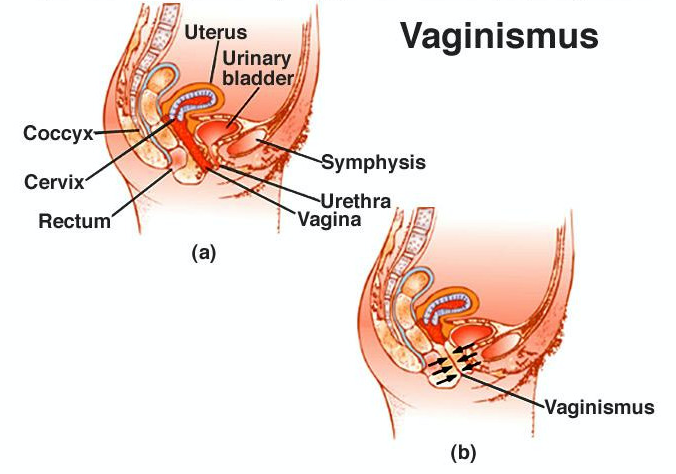
Vaginismus is a term referred to as involuntary tightening of the muscles at the entrance of the vagina. If a woman is nervous or feeling upset about having intimacy with her partner, this could make the body scream out loud, “NO ENTRY!” This condition could also occur if there is a physical problem caused by surgery or at birth.
Cases of vaginismus can range from mild to severe. In some cases, vaginismus tightness may begin to cause burning, pain, or stinging during intercourse. In other cases, penetration may be difficult or completely impossible.
What Causes Vaginismus?
The following are the most common causes of vaginismus in order of prevalence.
- Fear of pain, mostly because they heard from friends how painful it was for them
- Fear of the unknown
- Religious or cultural beliefs
- You perceive the vagina as fragile, thus worrying about scratching, hurting, breaking something inside it
- Past experience with discomfort, i.e., infection, a rough partner, a dry & uncomfortable vagina
While a woman may not know why she has vaginismus, she certainly knows that something is not right and may feel that she is inadequate or will never be able to have pleasurable sex.
The natural tendency is to suspect a medical problem, and, indeed, there are different potential medical causes for these problems, however, a better first line of defence would be a pelvic floor physical therapist. These professionals perform a thorough evaluation and assessment of the external and internal body parts and can determine if they need to refer on for medical input. More often than not, the condition is treatable by the pelvic floor therapist and the person can notice a change within a few sessions.
Could it be Stress?
Stress seems to be a contributing factor for everything these days but it is not to be taken lightly. Chronic underlying stress can contribute to inflammation in the body, and increase cortisol levels. High cortisol can decrease estrogen and lower estrogen can influence the tissues in the vagina such that they become dry and irritated. Stress can also contribute to tension in the pelvic floor muscles which can then play a role in sex being painful.
Some other causes of painful sex are:
- Vulvodynia—This is a pain disorder that affects the vulva. When pain is confined to the vestibule (the area around the opening of the vagina), it is known as vulvar vestibulitis syndrome (VVS).
- Hormonal changes—During perimenopause and menopause, decreasing levels of the female hormone estrogen may cause vaginal dryness.
- Vaginitis—Inflammation of the vagina, can be caused by a yeast or bacterial infection.
- Endometriosis. This is a condition in which the tissue similar to that which lines the uterus grows outside the uterus.
- Pelvic inflammatory disease (PID). With PID, the tissues deep inside become badly inflamed and the pressure of intercourse causes deep pain.
- Menopause. With menopause, the vaginal lining can lose its normal moisture and become dry.
How Can Painful Sex be Treated?
Many women with painful sex do not require medical treatment. If sex hurts, and especially if it hurts to the point that you are avoiding it or want to stop, it’s time to find a pelvic floor physical therapist and get help.
For cases of sexual pain in which there is no underlying medical or physical cause, working with a sexual health therapist may be beneficial.
Recommended Programs:
The 28-Day Challenge and Buff Muff Membership
I recommend checking out my comprehensive pelvic health education and fitness programs on my Buff Muff App. The most complete Pelvic Floor & Kegel exercise App to strengthen the pelvic floor.
The Buff Muff 28-Day Challenge (housed in the App) gets you started, and the Annual membership keeps you progressing so you can laugh, run, jump, and lift without the pesky leaks and annoying discomfort of prolapse symptoms.

FAQ
What is dyspareunia?
Dyspareunia is the medical term for persistent or recurrent pain during or after sexual intercourse, which can be caused by pelvic floor muscle tension, hormonal changes, stress, or an underlying condition like vaginismus.
What is vaginismus and how is it different from dyspareunia?
Vaginismus is an involuntary tightening of the muscles at the vaginal entrance that can make penetration painful or impossible, while dyspareunia is the broader term for any pain during sex — vaginismus is one specific cause of it.
Can stress really cause painful sex?
Yes. Chronic stress raises cortisol, which can lower estrogen and leave vaginal tissue dry and irritated, while also increasing tension in the pelvic floor muscles, both of which can make intercourse painful.
When should I see a pelvic floor physical therapist for painful sex?
If sex hurts at all, especially to the point that you’re avoiding it, it’s worth booking a pelvic floor physical therapist assessment — most women notice a change within just a few sessions.
What other conditions can cause painful sex?
Vulvodynia, hormonal changes during perimenopause and menopause, vaginitis, endometriosis, and pelvic inflammatory disease can all contribute to painful intercourse.
Is painful sex something I just have to live with?
No. Painful sex is common but not normal — most cases improve significantly with the right pelvic floor therapy, treatment for an underlying cause, or support from a sexual health therapist.
Related Reading
- Kegels and Sensuality
- The Keys to Great Sex After Baby
- Different Ways to Aid in Low Libido for Women
- Vaginal Estrogen and Other Helpful Therapies for Vaginal Dryness
- Genitourinary Syndrome of Menopause
If you enjoyed this article, you might also like our episode:
Vaginal Estrogen and Other Vulvovaginal Musings with Dr Kelly Casperson
Listen to the episode


