
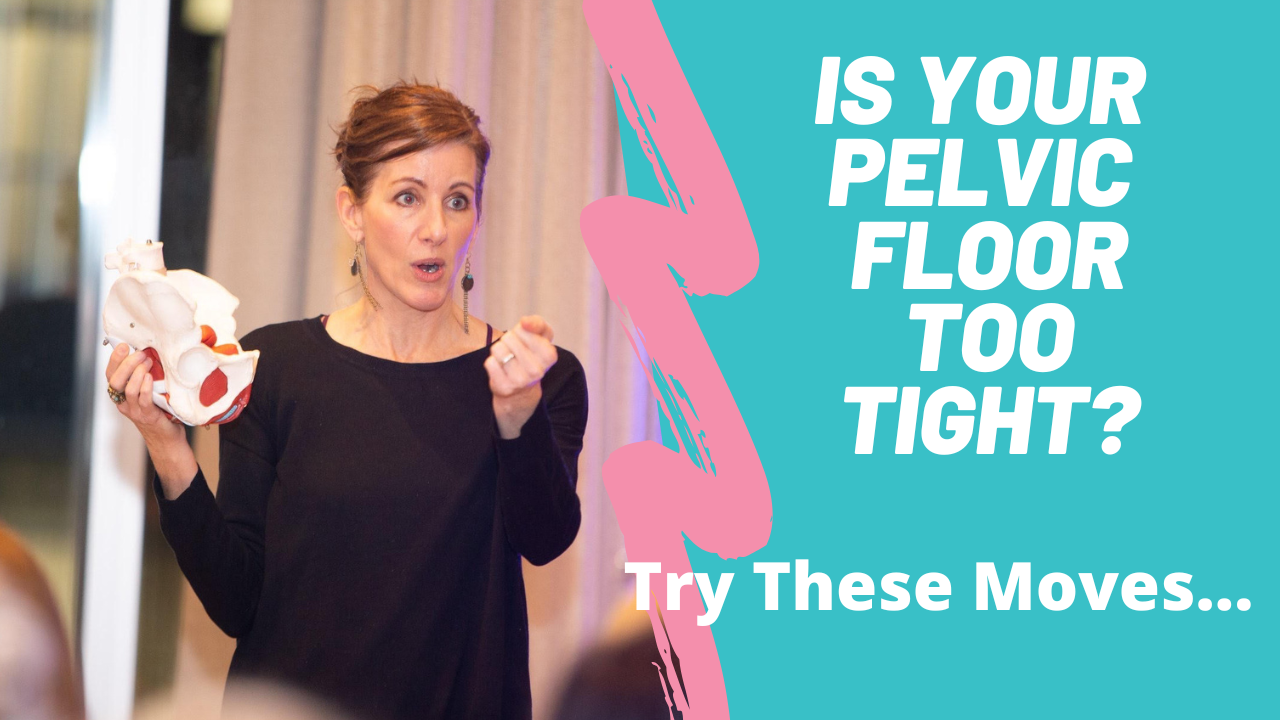
Release Exercises for Pelvic Floors that are Too Tight
Feb 12, 2022By Kim Vopni, The Vagina Coach — Certified Pelvic Floor Fitness Specialist · Published Feb 13, 2022
Direct Answer
If your pelvic floor is tight or overactive, gentle release exercises — like diaphragmatic breathing, hip and hamstring stretches, and mindful relaxation — help ease tension without adding strength work. Unlike Kegels, these moves calm an overactive pelvic floor, easing pain, urgency, and constipation. Always stop if a movement causes pain, and check in with a pelvic floor physiotherapist for guidance.
Key Takeaways
- Not every pelvic floor problem is a weakness problem — overactive or tight muscles can cause pain, urgency, and constipation too.
- Release exercises focus on relaxation and lengthening, not contraction, and should never feel painful.
- Diaphragmatic breathing is a foundational release technique that helps the pelvic floor let go of tension.
- Stop any exercise immediately if it causes pain, and consult a pelvic floor physiotherapist for a personalized assessment.
- Combining release work with a guided program, like the Buff Muff Method, helps address the whole pelvic floor picture — not just strength.
Time for some Fanny Fitness!
Sometimes we need a little R&R which usually stands for rest and relaxation. I will add on another R and make it rest release and relaxation.
I want to share a release routine that is designed to help you let go of tension in the pelvic floor that may be contributing to your symptoms. Many think that if they leak or have prolapse, it must mean that they are weak and the muscles are lax. In some cases, the opposite is true. Muscles that are overactive and holding on to tension can't do their jobs effectively. They may not have the range of motion left or the strength to respond when needed.
Try these exercises out and enjoy the space and sense of calm that may arise. None of these should be painful. There may be some discomfort but stop if you feel pain and move to the next exercise. Also, book in with a pelvic floor physio to get to the root of your pain.
Thank you so much for watching!
My intention is to add a new video to my YouTube Channel every Friday. There is a selection of videos for all things to do with Pelvic Health and Education for women at all stages of life.
I use fitness and movement to help women and vagina owners prevent and overcome pelvic floor challenges like incontinence and organ prolapse. I also offer help for people in pregnancy, motherhood, and menopause!
More Effective than Kegels Alone
Here is an amazing Core & Pelvic Floor workout using the p.ball from p.volve. The folks from p.volve provided me with the p.ball and I LOVE it! I have used my own ball and loop band combo in the past but this is so much easier!
If you would like your own, they have provided me with a code KIM20 that you can use to get 20% off your first purchase. GET IT HERE I do earn a referral commission for people who do choose to purchase with the link above.
I use the commissions to help fund the creation of my free content on YouTube.
I had a lot of fun with this workout, and I hope you do too!
Other Programs:
The 28-Day Challenge and Buff Muff Membership
I recommend checking out my comprehensive pelvic health education and fitness programs on my Buff Muff App. The most complete Pelvic Floor & Kegel exercise App to strengthen the pelvic floor.
The Buff Muff 28-Day Challenge (housed in the App) gets you started, and the Annual membership keeps you progressing so you can laugh, run, jump, and lift without the pesky leaks and annoying discomfort of prolapse symptoms.
Related Reading
Pelvic health is not just about Kegels - Discover why a well-rounded pelvic floor approach goes beyond strengthening alone.
Hypopressives or Low-Pressure Fitness - Explore another gentle, breath-based approach to pelvic floor and core health.
Your Core and Pelvic Floor - Learn how core and pelvic floor coordination supports safe, pain-free movement.
Prolapse Safe Planks and Push-ups - See how proper technique lets you build strength without compromising your pelvic floor.
Frequently Asked Questions
How do I know if my pelvic floor is too tight instead of too weak? Signs of an overactive or tight pelvic floor include pain during intercourse, difficulty starting urination, constipation, and pelvic pain, rather than leakage alone. A pelvic floor physiotherapist can assess your muscle tone to confirm what's going on.
Are Kegels bad for a tight pelvic floor? Kegels strengthen through contraction, which can worsen tension in a pelvic floor that is already tight or overactive. Release and relaxation exercises, like the ones in this routine, are usually recommended instead until muscle tone normalizes.
What is a pelvic floor release exercise? Release exercises use breathing, stretching, and mindful relaxation, rather than contraction, to help tight pelvic floor muscles lengthen and let go of tension, easing pain and improving function over time.
What should I do if a release exercise causes pain? Stop the exercise immediately. Pain is a signal to ease off, and a pelvic floor physiotherapist can help you modify the movement or investigate what's driving the underlying tension.
Can I do these release exercises on my own, or do I need guidance? Gentle release exercises like these are safe to try at home, but working with a pelvic floor physiotherapist or a guided program like the Buff Muff Method helps ensure you're using the right technique for your body.
If you enjoyed this article, you might also like our episode:
Pelvic Pain With Stephanie Prendergast
Listen to the episode


