
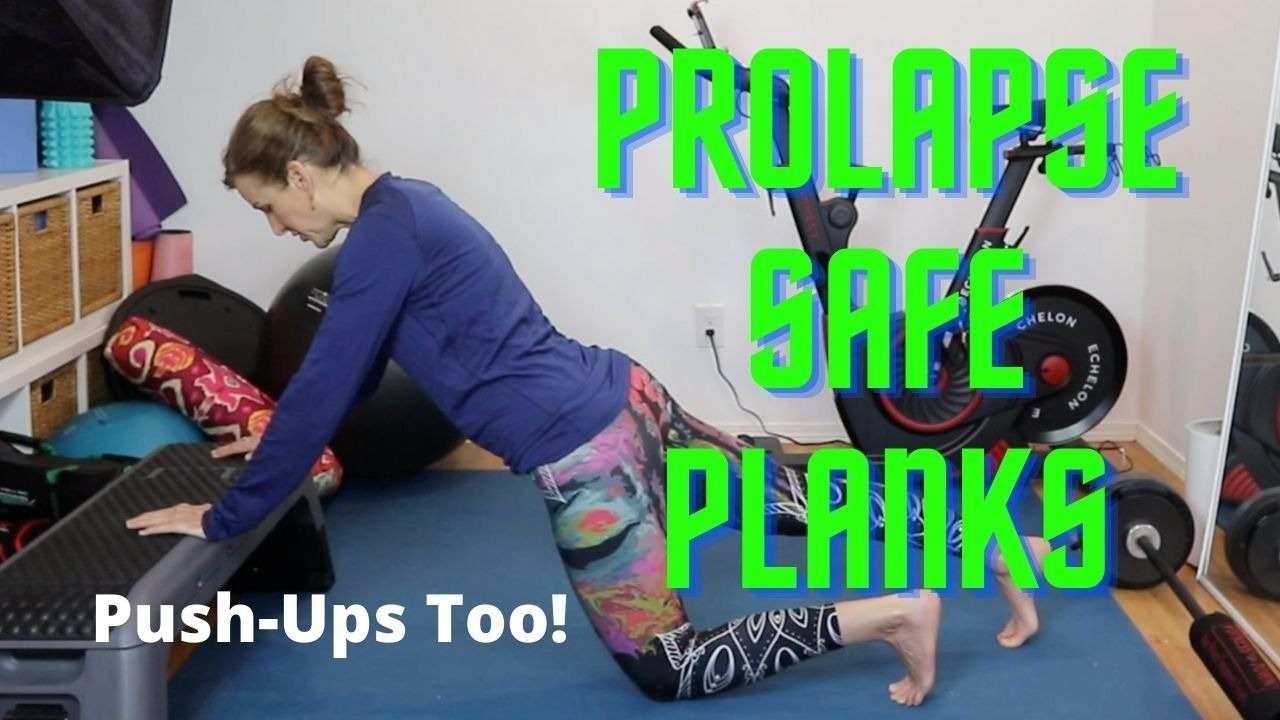
Prolapse Safe Planks and Push-ups
May 21, 2022By Kim Vopni, The Vagina Coach — Certified Pelvic Floor Fitness Specialist · Published May 21, 2022
Direct Answer
Planks and push-ups are safe with prolapse when you manage intra-abdominal pressure correctly — engaging the core breath and pelvic floor before each rep rather than avoiding the movement altogether. Progressing from wall, to bench, to floor variations lets you build strength at a pace your pelvic floor can support, so movement becomes protective rather than risky.
Key Takeaways
- Avoiding planks and push-ups altogether is often worse for prolapse than doing them with proper technique.
- The core breath — coordinating breath with pelvic floor engagement — is the foundation for every plank and push-up variation.
- Progress from wall, to bench, to floor push-ups and planks as your pelvic floor and core control improve.
- Hold pelvic floor engagement for about 5 seconds per rep, aiming for 2 sets of 10–15 reps.
- Safety depends on your execution of the exercise, not the exercise itself — the goal is managing intra-abdominal pressure, not avoiding movement.
Many women are afraid to exercise when they have a prolapse. Truth be told, movement is essential, and NOT moving is worse for prolapse than exercise.
Exercising with prolapse is all about ensuring a good pelvic floor and core engagement without breath-holding.
These exercises are really good for postpartum recovery as a return to planks or anyone who is currently feeling a little uneasy with regards to doing planks or push-ups with prolapse.
This is great for anyone wanting to build up strength and resiliency in planks and push-ups, as well as people who have recently given birth and want to get back to more demanding exercise.
I recommend starting with my Core Confidence Program for the first 8 weeks postpartum and then progressing to this series of planks. After you have completed my Core Confidence Program, try these!
To be clear, planks are not dangerous. It is totally safe; we just want to be sure we can manage intra-abdominal pressure so that we can get good core activation.
It is not about an exercise being safe or not safe; it is about YOUR execution of the said exercise.
The foundation of the movements in these exercises, in the video below, includes the core breath, so I will include that video and recommend you watch it first before moving on to trying the various styles of planks.
I give you many options for planks and push-ups where you will add the core breath in a variety of positions depending on the level you are at.
Prolapse Safe Planks
Start at the wall, and if easy and you can maintain your pelvic floor/core engagement, try the next hardest.
For each move, add the core breath and hold the pelvic floor engagement for 5 seconds and aim for 2 sets of 10-15 reps. Start at the wall and master your core control there before moving on. Next, move to the bench, master that and then the floor etc.
Core Breath Video
More Exercise Resources
Daily life can be challenging with Rectocele Prolapse - Learn more about rectocele prolapse symptoms and how pelvic floor exercise supports daily management.
Your Core and Pelvic Floor - Understand how your core and pelvic floor work together to support safe movement.
You CAN Fix Incontinence and Prolapse! - See why the right exercise approach, not avoidance, is key to improving symptoms.
Pelvic Health is Not Just About Kegels - Explore the bigger picture of pelvic floor training beyond kegels alone.
The 28-Day Challenge and Buff Muff Membership
I recommend checking out my comprehensive pelvic health education and fitness programs on my Buff Muff App. The most complete Pelvic Floor & Kegel exercise App to strengthen the pelvic floor.
The Buff Muff 28-Day Challenge (housed in the App) gets you started, and the Annual membership keeps you progressing so you can laugh, run, jump, and lift without the pesky leaks and annoying discomfort of prolapse symptoms.
Frequently Asked Questions
Are planks safe if I have a prolapse? Yes. Planks are safe for most women with prolapse when performed with proper core breath and pelvic floor engagement to manage intra-abdominal pressure. Start at the wall, master control there, then progress to bench and floor variations as your strength improves.
What is the core breath and why does it matter for prolapse? The core breath coordinates your breathing with pelvic floor engagement, helping you avoid breath-holding and excess downward pressure during exercise. It’s the foundation for every plank and push-up progression in this program.
How many reps and sets should I do? Aim for 2 sets of 10–15 reps, holding pelvic floor engagement for about 5 seconds per rep. Start at the easiest variation and only progress once you can maintain good engagement throughout.
Should I avoid push-ups completely if I have prolapse symptoms? Not necessarily. Movement is essential, and avoiding exercise altogether is often worse for prolapse than exercising with good technique. Progress gradually — wall, bench, then floor — while managing your breath and pelvic floor engagement.
When should I start these plank and push-up progressions postpartum? These exercises are ideal after completing a foundational postpartum program that builds core and pelvic floor control. From there, you can progress into these plank and push-up variations safely.
If you want expert-led guidance on core breath, pelvic floor engagement, and safe strength progressions like these plank and push-up variations, join the Buff Muff membership for guided programs built to help you move with confidence, not fear.
If you enjoyed this article, you might also like our episode:
Is ___________ SAFE for my pelvic floor?
Listen to the episode


