
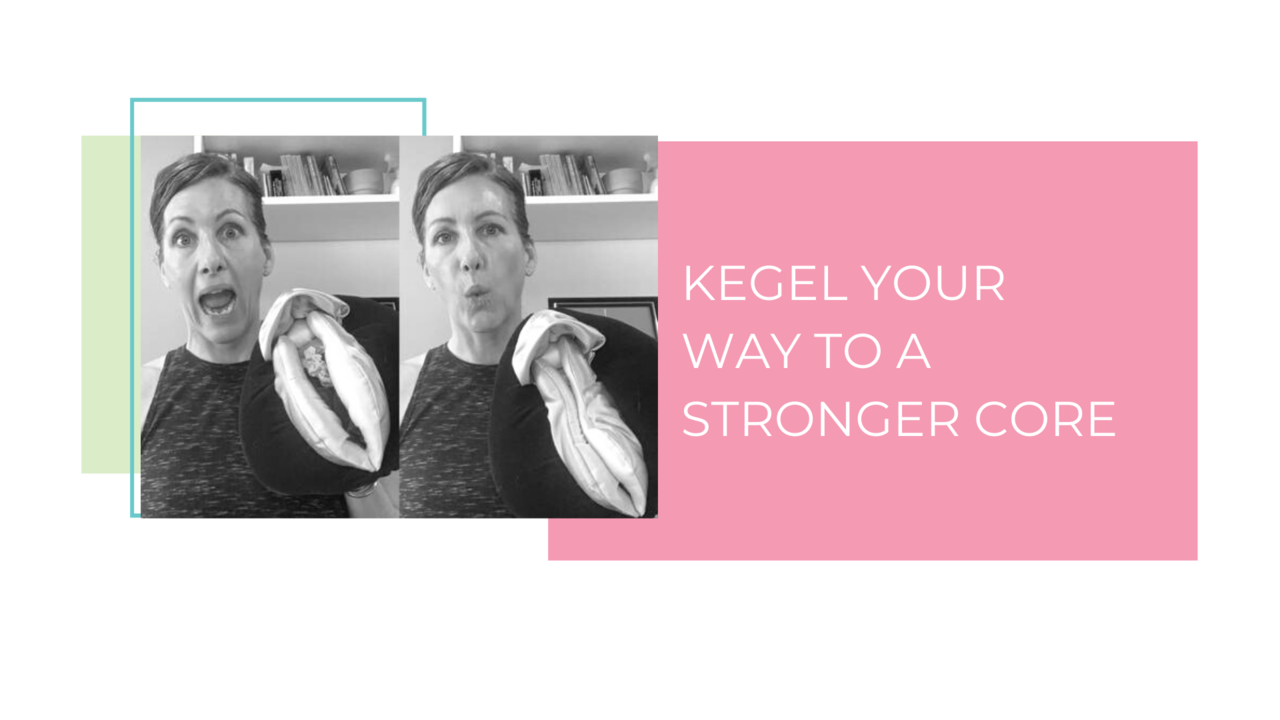
Kegel Your Way to a Stronger Core
Dec 28, 2019
By Kim Vopni, The Vagina Coach — Certified Pelvic Floor Fitness Specialist · Published December 29, 2019
Direct Answer
Yes, Kegel exercises can build a stronger core, but only when you coordinate them with your breath. This technique, called the Core Breath, links your pelvic floor to your deep abdominal muscles (the transversus abdominis) so they contract together, creating the foundation for real core stability, better posture, and a flatter midsection.
Key Takeaways:
- The pelvic floor is the foundation of your core — training it separately from your breath limits your results.
- The Core Breath coordinates your diaphragm, pelvic floor, and transversus abdominis into one functional unit.
- Common cues like "belly button to spine" often skip the pelvic floor entirely, which can create imbalance.
- Practicing the Core Breath during daily movement, not just workouts, builds lasting core strength.
- The Buff Muff App teaches the Core Breath step-by-step alongside pelvic-floor-friendly core exercises.
Did you know you can kegel your way to a stronger core? The pelvic floor is the foundation of the core and it needs exercise just like any other muscle in your body. Working the core from the inside out will build a stronger foundation to allow for progressively challenging exercise.
As Paul Check says, “You can’t fire a cannon from a canoe.” If you don’t have a strong core, you will not be as powerful or as effective in any of the other activities you pursue. You may actually be doing more harm than good by undertaking exercise that is too intense and that creates more intra-abdominal pressure than your pelvic floor can handle!
It Starts With The Breath
Building a strong foundation starts with the breath. As you breathe in, the diaphragm moves down and draws air in. The diaphragm’s best friend is the pelvic floor (they’ve been besties since birth!) so they go everywhere together. As the diaphragm moves down, so does the pelvic floor.
The other thing that happens is the deepest layer of the abdominals, the transversus abdominus and the small muscles along the spine, expand. The core unit expands and prepares to engage on the exhalation.
As you breathe out, the diaphragm and the pelvic floor move up and the transversus abdominus moves inwards to engage the core and bring stability to the spine and pelvis. This co-contraction between the pelvic floor and the transversus abdominus is critical and is actually the missing link to the flat tummy everyone is longing for.
Cues like ‘bring the belly button to the spine’ are used in gyms, fitness classes, yoga and pilates classes with good intention, but the focus is on the transversus only with no mention of the pelvic floor.
By shifting the focus to the pelvic floor and thinking of the perineum lifting instead of the belly button moving in, you will encourage the natural co-contraction of the pelvic floor and transversus abdominus, which will strengthen your core from the inside out.
The Core Breath
The Core Breath is one of the best core connection exercises out there. The Core Breath is essentially Kegels coordinated with the breath. I've created a step-by-step video guiding you through it:
Core Breath in Wide-Leg Child's Pose
For another variation, which takes out the influence of gravity and can be relaxing and restorative, take the Core Breath to a wide-leg child’s pose.
Here’s how:
Move into wide-leg child’s pose. You can have your arms fully extended above your head with your forehead on the mat or your head turned to one side. You can also rest your head on the backs of your hands with bent arms, or you can have your arms long by your sides with your forehead on the mat. You may also choose to have a bolster under your chest for more support. Keep your toes together and your knees wide to the sides of the mat. Relax and just breathe for a few moments.
Now bring your awareness to the inflow of your breath. As you bring air into your body, feel and visualize the expansion allowing maximum oxygen intake. Breathe into your sides, your belly, your back, your pelvic floor. Inhale to expand as you fill your body with air. Breathe slowly, breathe deeply.
Bring your attention to your pelvic floor. As you inhale to expand, feel space, openness and expansion between your sitz bones, feel fullness in your perineum. Enjoy a few breaths with this awareness.
Now turn your awareness to emptying your breath. Feel the fullness leave your perineum, feel your floor lift, feel the tummy move inwards and feel the ribs soften. Feel less space and fullness in your pelvic floor as the core unit engages and the air leaves the space it occupied.
Make Core Breathing a Daily Habit
Spend a few minutes enjoying this connection and practice daily. Take the awareness of your breath, of your core, and of your floor with you throughout your day.
Apply this breathing to your daily movement and exercise to keep the core unit active and working together as a team. It is this natural ebb and flow of the breath that brings tone, strength and length to the muscles of your core.
My 28 Day Kegel Challenge teaches you the core breath and then how to apply it to my top moves for pelvic floor fitness. It has helped hundreds of women ditch the pads, ease back pain and regain their confidence!
Poor posture, too much sitting, pregnancy and birth, injury, surgery - life - sometimes interrupts this ebb and flow and takes your focus outside the box. It's time to bring it back and think INSIDE the box.
The Buff Muff App
The Buff Muff App will help you finally get clarity on the elusive kegel and teach you how to activate your pelvic floor appropriately and then add it to movement. There is a ton of free content available to anyone who downloads the app including a 7-day pelvic floor fitness challenge to introduce you to the concept of a whole-body fitness approach to pelvic health. Once the free challenge ends you have the option to join the membership for ongoing support from me, your very own vagina coach.


Frequently Asked Questions
Can Kegels really strengthen your core?
Yes. When Kegels are coordinated with your breath, they activate the pelvic floor and transversus abdominis together, creating a natural co-contraction that stabilizes your spine and pelvis. This pattern, the Core Breath, builds functional strength more effectively than isolated squeezes.
What is the Core Breath?
A breathing technique that pairs your inhale and exhale with the natural movement of your pelvic floor and deep abdominals. On the inhale, the diaphragm and pelvic floor descend; on the exhale, they lift while the transversus abdominis draws in.
Why doesn't "belly button to spine" work for everyone?
That cue focuses only on the transversus abdominis and ignores the pelvic floor, which should move with it. Without pelvic floor engagement, the pattern can create imbalance rather than genuine stability.
How often should I practice the Core Breath?
Weave it into everyday movement and exercise rather than treating it as a one-time drill. Consistent practice retrains the natural coordination between your breath, pelvic floor, and core.
Can strengthening my core help with pelvic floor dysfunction?
Yes. Because the pelvic floor and deep core work as a team, strengthening one supports the other, often improving leaks, back pain, and stability.
Where can I learn the Core Breath step by step?
The Buff Muff App walks you through it and applies it to top pelvic-floor-friendly core moves.
Related Reading
If you enjoyed this article, you might also like our episode:
Building A Resilient Pelvic Floor with Terri Elder
Listen to the episode


